upcoming

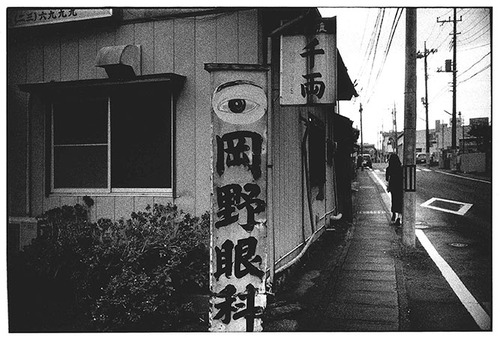
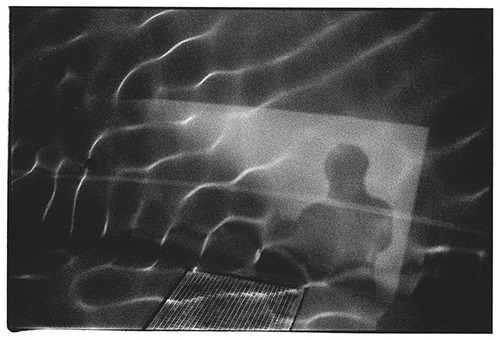
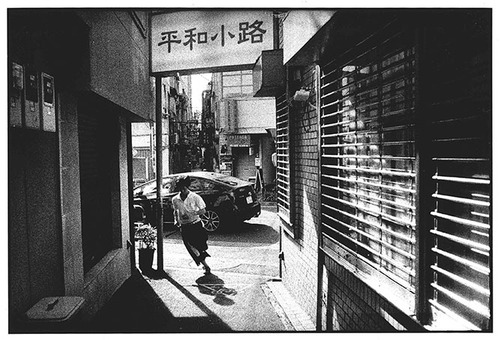
Zen Foto Gallery is pleased to present a group exhibition ‘Twilight and Evening Bell’, featuring photographers Seung-Woo Yang, Haruto Hoshi, and Brian Sergio, from Friday, August 21 to Saturday, September 26, 2026.
Twilight—the moment suspended between day and night—and the sound of the evening bell announcing the arrival of that boundary. Between life and death, reality and illusion, loss and return, the three photographers have each continued to stand on their own borderlines.
Seung-Woo Yang continues to walk forward carrying the weight of regret after losing a dear friend. Through capturing the many faces of the city, Haruto Hoshi attempts to escape feelings of powerlessness and emptiness brought on by a reality that engulfs him, as he floats through the chaos of the city. Brian Sergio is confronted with feelings of loss and loneliness as he descends into the darker valleys of life. For these three photographers, the act of taking photographs is deeply intertwined with their ways of living, quietly revealing the relationship between the photographer and the medium of photography itself. When these three perspectives—created in different places, through different methods, and from different emotions— intersect, the power of photography to connect ‘here’ and ‘there’ emerges. To commemorate the publication of each artist’s new photobook, a talk event will be held on Saturday, September 19, during the latter half of the exhibition period. Moderated by Zen Foto Gallery director Mark Pearson, the talk will feature all three artists. We warmly invite you to join us.

Seung-Woo Yang ”You’re there and I’m here”
In the summer of 1998, while continuing to photograph in Kabukicho, Shinjuku, SeungWoo Yang spent his nights sleeping on cardboard boxes on the street. During this time, he became friends with a homeless man named Gonta, who slept beside him.
For Gonta, the world was divided into two sides: whether one had a place to return to or not. That determined whether one belonged “there” or “here.” Despite standing on different sides, a quiet friendship began to grow.
Through his lens, Yang captured Gonta’s way of life, preserving his words and presence as works of art in an attempt to build a bridge between two separate worlds. Driven by this desire, he published ”You’re there and I’m here” in two volumes: first through Singpoosha in 2006, and later through Zen Foto Gallery in 2011.
However, this friendship, which continued for more than two decades, came to be tinged with regret following Gonta’s death. By adding new works to the two previously out-of-print photobooks and bringing them together into a single “complete edition,” this story is now being presented once again.
The documentary nature inherent in the medium of photography reflects the emotions exchanged between photographer and subject, allowing them to continue to live beyond time and space. Eventually, these images connect two wandering souls and quietly awaken those same emotions in the viewers who encounter the work.

“Whenever I said “Thank you” to Gonta, he always said “And thank you” back to me. I leaned on that warmth until the very end. The only thing I can do now is to live my own life as fully and for as long as I can, and keep sharing his words and his face to as many people as possible, so that he might smile and feel proud. And maybe, sometimes I’m just selfishly hoping that when I finally make it to “his world” and see him again, I’ll have fewer excuses for those times I failed to come. I lost old friends whose faces I wished I could see again after they died, but there were no photographs. With Gonta, at least, I will never have that worry. For the first time in a long time I was glad I became a photographer.”

― from Seung-Woo Yang’s afterword

Haruto Hoshi ”Tokyo Trippy”
Mostly photographed after sunset, Hoshi captures sides of the city that emerge only at night, raw and unfiltered, in neighborhoods such as Roppongi, Shibuya, Ginza, and Shinjuku. Rather than focusing on chaos or scandal, he turns his attention to people, moments, unspoken stories, and the sheer diversity of life in Japan’s megacity. The exhibition presents a selection of works from ‘Tokyo Trippy’, the artist’s first color photobook in eight years, which features photographs taken primarily since 2014 and has been personally selected and edited by the artist.

“The flow of people never ceased. The glittering yet profoundly dark night streets were perpetually illuminated by the constant flow of people passing by, like neon lights. If only this time could continue, uneventfully, with a measure of freedom guaranteed, I would wander Tokyo’s nights forever, at an ambiguous distance, irresponsibly.”

― from Haruto Hoshi’s afterword

Brian Sergio ”Lost and Found”
Known for his raw and energetic photographs of underground scenes and subcultures, Brian Sergio’s new photobook “Lost and Found” was created during a period of “loss and isolation” following several drastic events in his personal life, including the death of his grandfather, the burning down of his family’s house, a creative drought, and the end of a difficult relationship.
Shot in vivid colors, Sergio depicts this time in his life in diary-like captures that reveal contradictory, at times almost incongruent aspects of his native Philippines – sex, freedom, and self-expression, but also religion, rules, and misery. This publication marks the artist’s second photobook with Zen Foto Gallery, following the volume published by the gallery in 2018, and is his first color photobook.

“I realized that even with the smorgasbord of raunch sex-filled activities, I found that by impulse, I had been taking pictures that were out of my usual wheelhouse.
They were in colour, they were subtle, yet vivid, with hints of nuances of the life I had left behind. It was a journey to a subconscious that took me back to a place which remains familiar even now. It was the mundane details of my past that I’ve either neglected or just not seen. It was home, a place I longed for but had forgotten. A place I didn’t know I was looking for.”

― from Brian Sergio’s foreword